Defect Coverage & Cut Level
- Grinding swirl traces — the circular trails the surface picks up during the grinding process are the first target. The cut levels the haze around them so the panel reads even under a spotlight instead of showing a pattern of rings.
- 2000 grit sanding marks — this is the sanding grade the middle cut is built around. It clears the fine sand marks left by 2000 paper, so you are not pushed into a second heavy pass over the same panel.
- Wash and wipe marring — light spider webbing from towels, brushes and everyday washing responds to the same pass. The abrasive removes the surface haze rather than filling it, so the improvement survives the next wash.
- What it will not fix — a scratch you can feel with a fingernail, exposed primer, stone-chip craters or a burn-through on an edge. Those need paint, not polishing.
- Clear coat work — a polishing compound for car scratches removes a controlled amount of clear coat, so the panel has to be sound before you start. On thin or previously repaired paint, use a softer pad, lighter pressure, and check the result as you go.
- Matching the cut to the damage — if the panel carries coarser 800 or 1200 grit tracers or heavy oxidation, take a heavier cutting step first and use this polish compound for car paint refinement afterwards.
- Test one section first — work a single panel section, wipe it and inspect under a swirl finder before you commit the whole car. Two minutes tells you whether the middle cut is the right level for that paint.
Product Overview
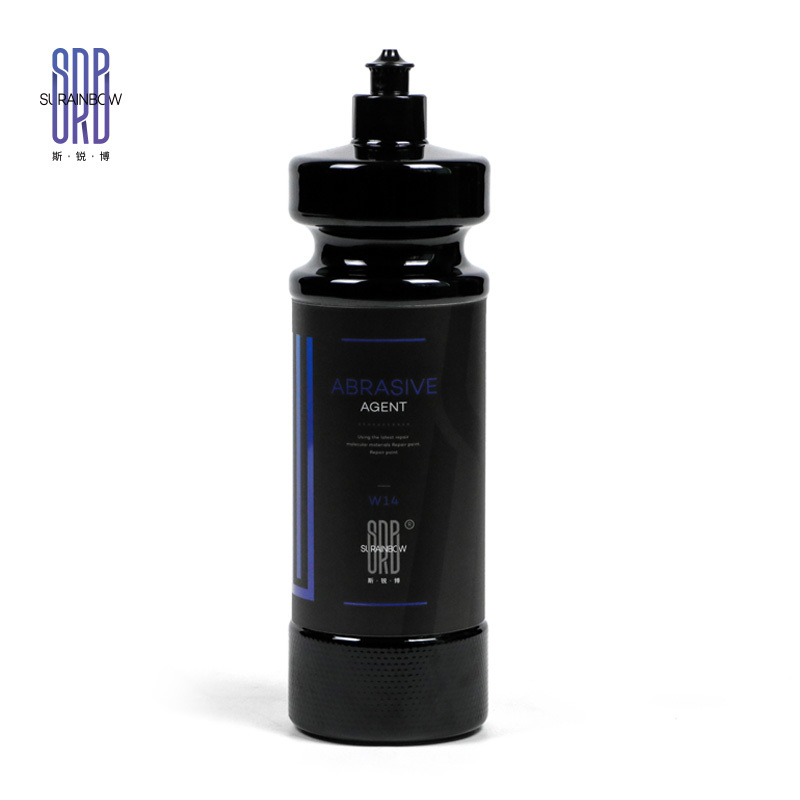
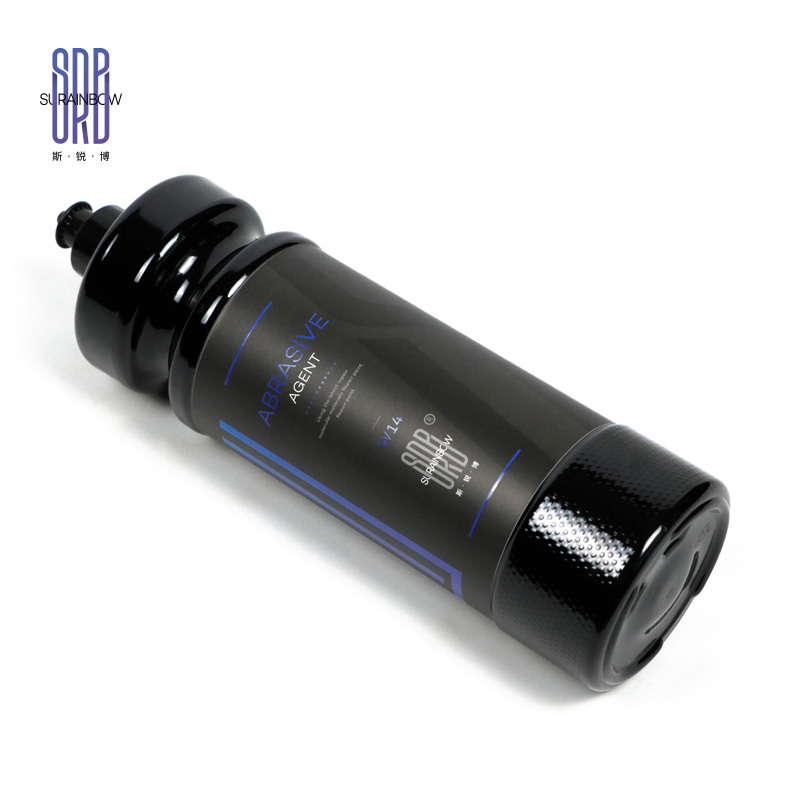
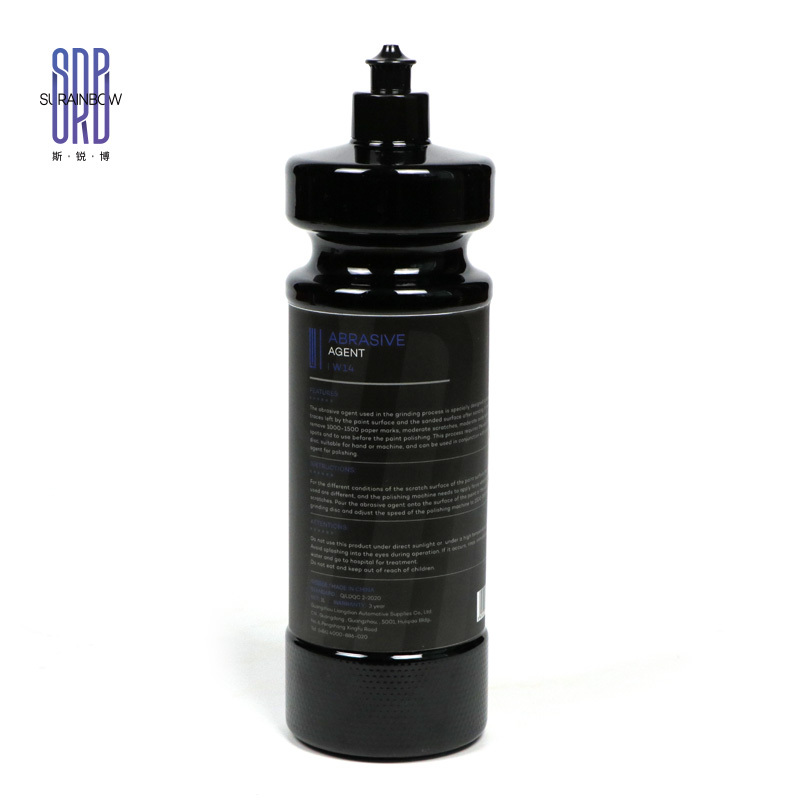
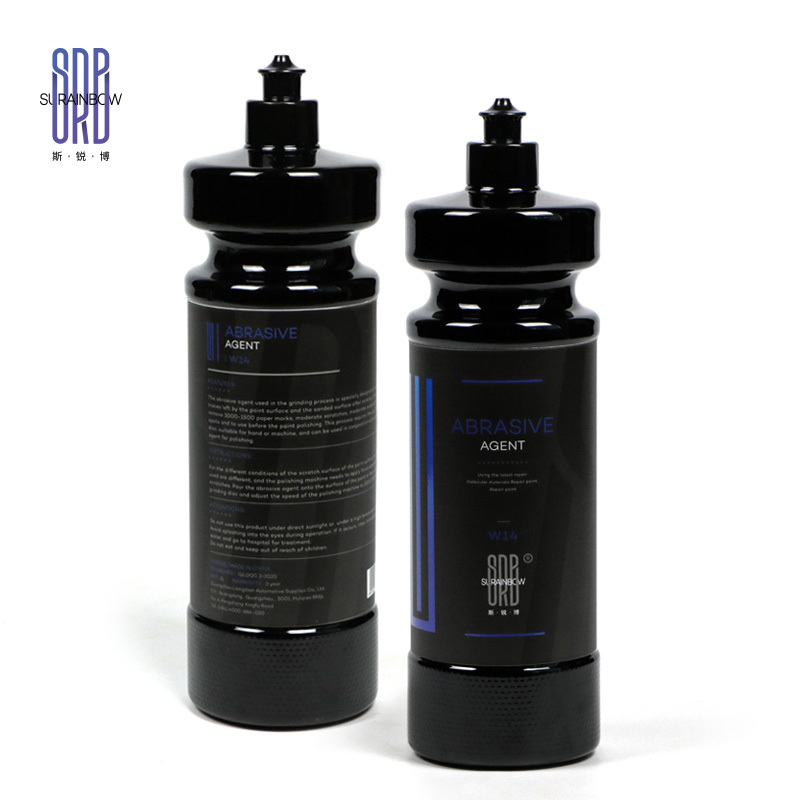
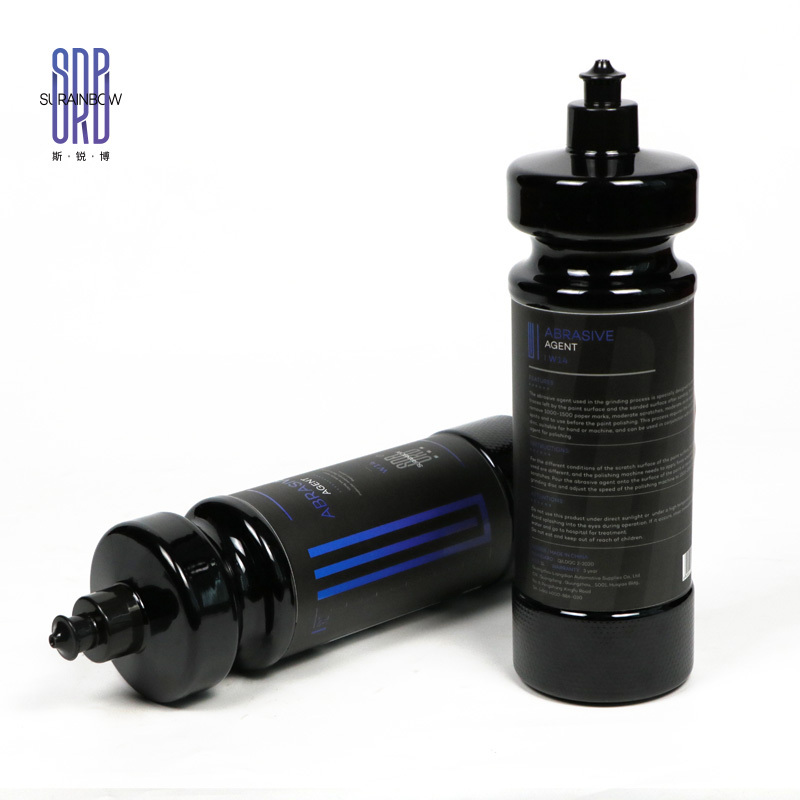
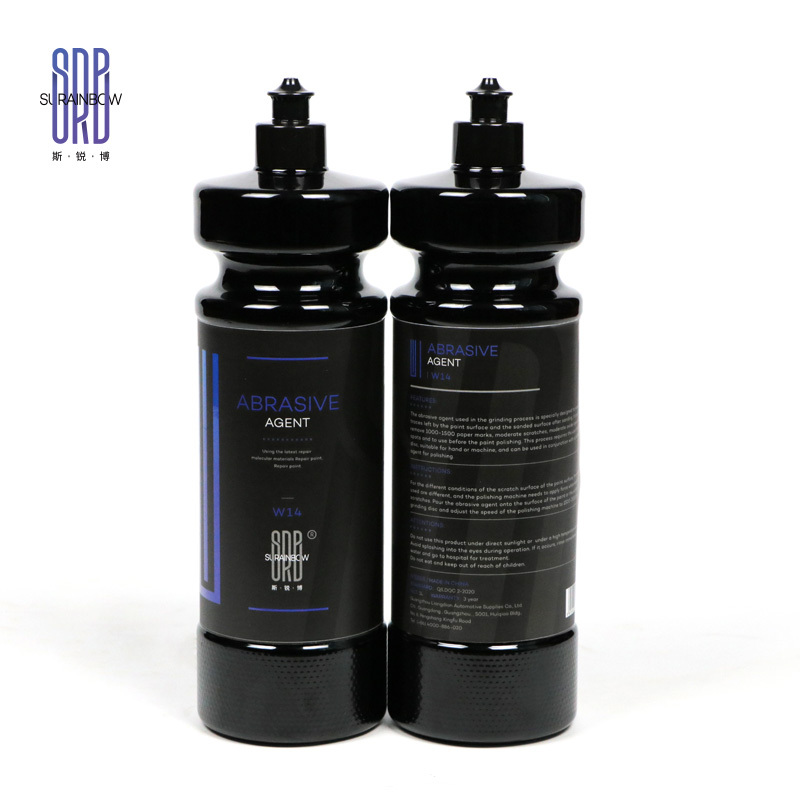
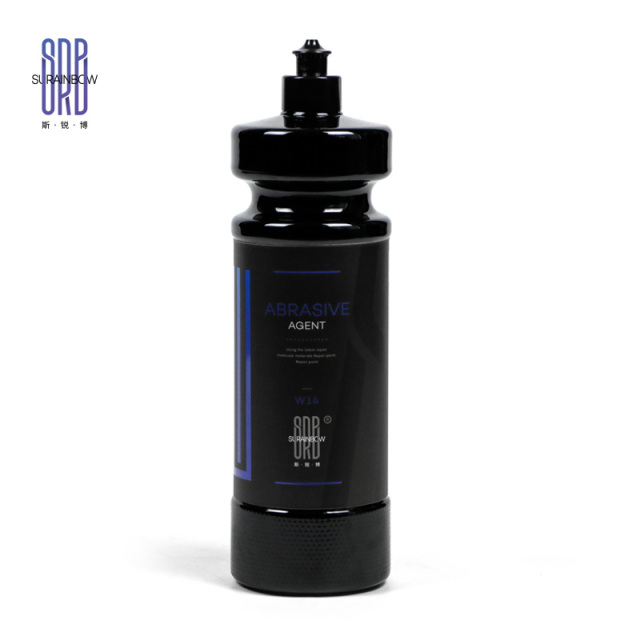
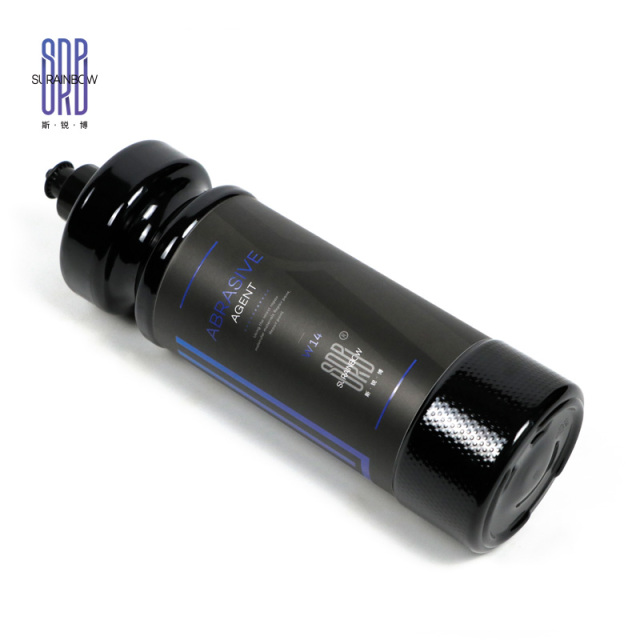
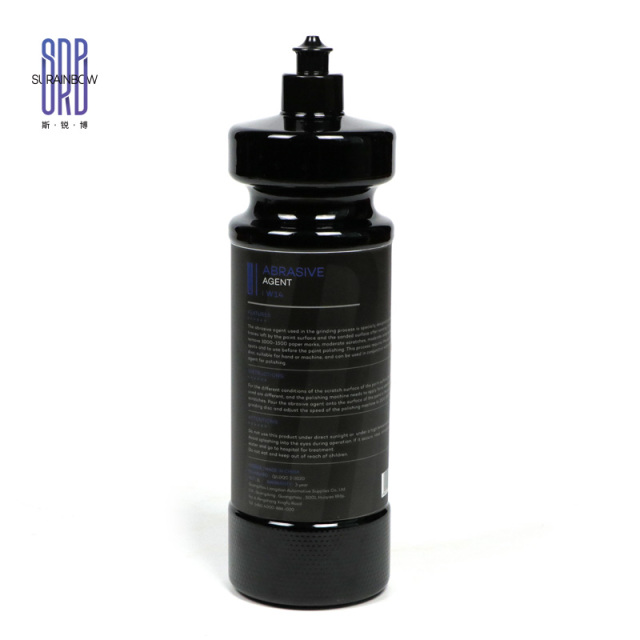
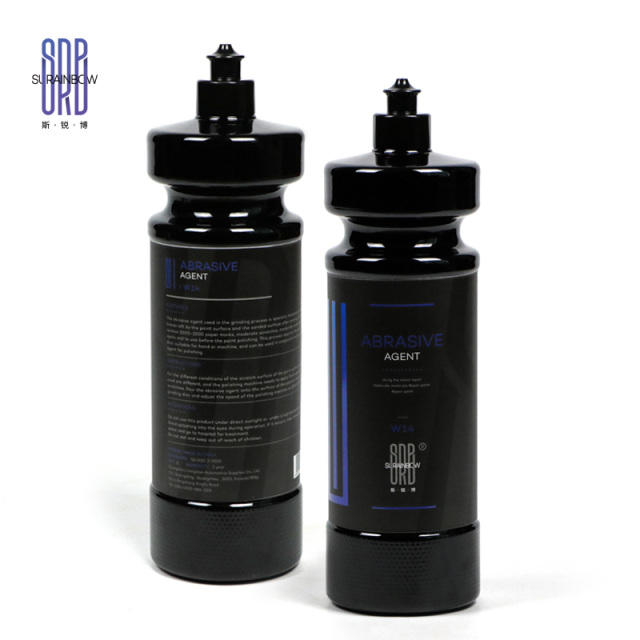
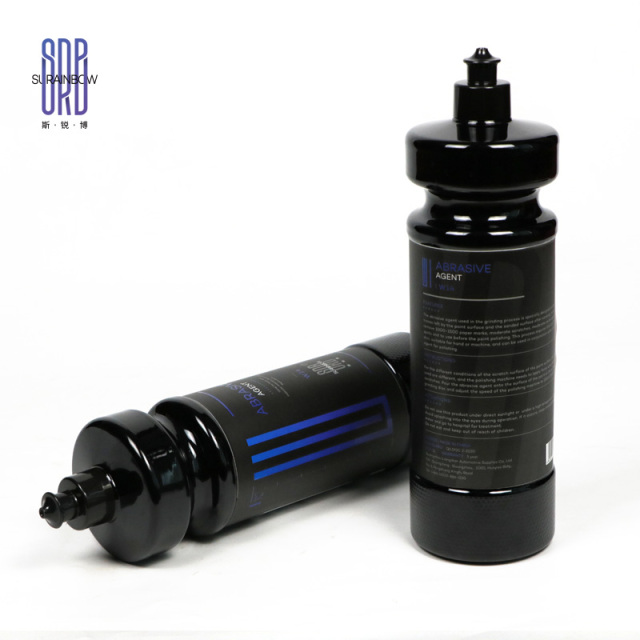
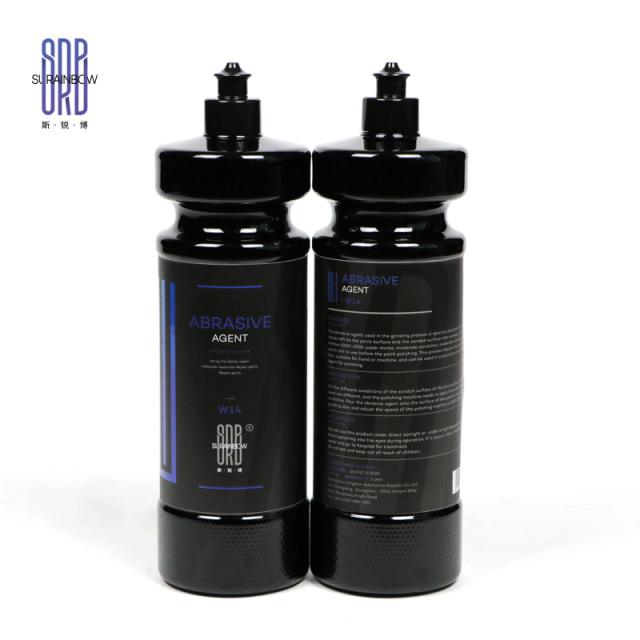
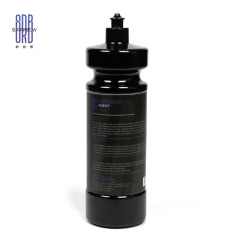
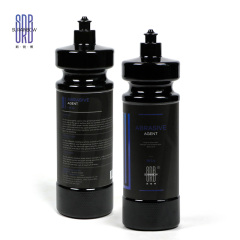
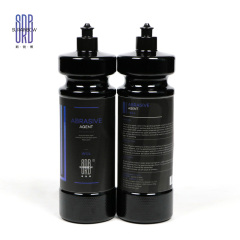
W21 from SURAINBOW is a middle cut compound car polish: a liquid abrasive worked across the paint on a polishing pad to level the fine damage left by sanding and machine work, then wiped away. It sits between a heavy cutting compound and the final gloss step, and that position is what decides when you reach for it and when you do not.
Where it earns its place is the middle of the defect scale. This is a polishing compound for car scratches and marring that come from washing, wiping and light machine work — marks that show up under a swirl-finder light but do not catch a fingernail. Damage that has gone through the clear coat is a paint repair rather than a polishing job, and no compound puts material back.
The product belongs to the SURAINBOW polish series and is supplied for trade: importers and distributors building a correction line, detailing businesses running multi-step packages, and private-label teams who want the middle step of the sequence under their own label. It runs on a machine or by hand, wipes off cleanly, and hands the panel over to a finish step.
The middle cut earns its keep wherever paint has to look right before it leaves the bay. In a detailing shop it is the workhorse of a two-step package, taking a swirled daily driver up to the point where a finish step can produce gloss. In a body shop it is where a repaired panel lands after sanding and before the final polish. On a reconditioning lot it decides whether a car photographs well or looks tired under forecourt lighting. It is made for automotive paint; if you also service gelcoat, marine topcoats or aircraft finishes, confirm the substrate with us before you put this polishing compound for car scratches anywhere near them. Trade buyers arrive at this step from three directions: a distributor wants a complete polish series instead of a single bottle, a detailing chain wants a cut its staff can be trained on quickly, or a private-label team wants its own label on the middle of the sequence. Distributors comparing car cleaning products manufacturers usually start with one proven correction step and build the range around it, which is why this cut is often the first item on a sampling list. Tell us which of those is your case and the quotation will be built around it.
Formulation & Data Sheets
- What is disclosed, and what stays with us — the full formulation is not published, but every batch travels with documentation: a safety data sheet listing the hazardous components and their classification, and a technical data sheet describing this car paint polishing compound, its working range and its physical form.
- Safety data sheet to your market's format — ask for the SDS at quotation stage and tell us the language and the format your market works to. The sheet you file should describe the batch you actually receive, not a generic file from an earlier run.
- Certificate of analysis per batch — a CoA is issued against the batch number printed on the bottle, so the paperwork, the retained sample and the goods all refer to the same production run.
- Where the performance statements come from — the grinding swirl and 2000 grit sanding mark results describe the defect range the compound car polish is built to work on. Paint hardness, film thickness and pad choice differ from vehicle to vehicle, so confirm the result on a test panel and tell us what written back-up your own customers ask you for.
- Third-party testing and market declarations — if your market, your customer or your own compliance review calls for third-party test reports, specific declarations or translated warning text, put it in the brief. What can be supplied is confirmed per project rather than assumed from the product alone.
- Label and warning text — hazard pictograms, signal words and precautionary statements come from the SDS, and label copy is proofed against them so the bottle on the shelf and the file in your folder agree.
- Keeping the file current — safety data sheets and technical sheets are revised over time; ask for the current versions with each order so the documents behind your car care supplies listing are never the ones from an earlier shipment.
Machines, Pads & Working Method
A dual-action polisher is the safer default for this car polishing compound. It stays flat over curves and body lines, it is far less likely to burn an edge than a rotary, and with a moderate cutting foam pad it still clears the haze a middle cut is meant to remove. A rotary corrects faster on flat panels and harder paint, but it needs a steadier hand and full attention at edges, badges and raised body lines.
Pad choice does most of the work. A moderate cutting foam pad is the normal starting point, a microfiber cutting pad adds bite on harder paint or heavier haze, and a soft finishing pad belongs to the following step rather than this one. Brush pads out as they load — clogged foam stops cutting and starts marring — and plan on a fresh pad every panel or two on a full car so the cut stays consistent from the first panel to the last.
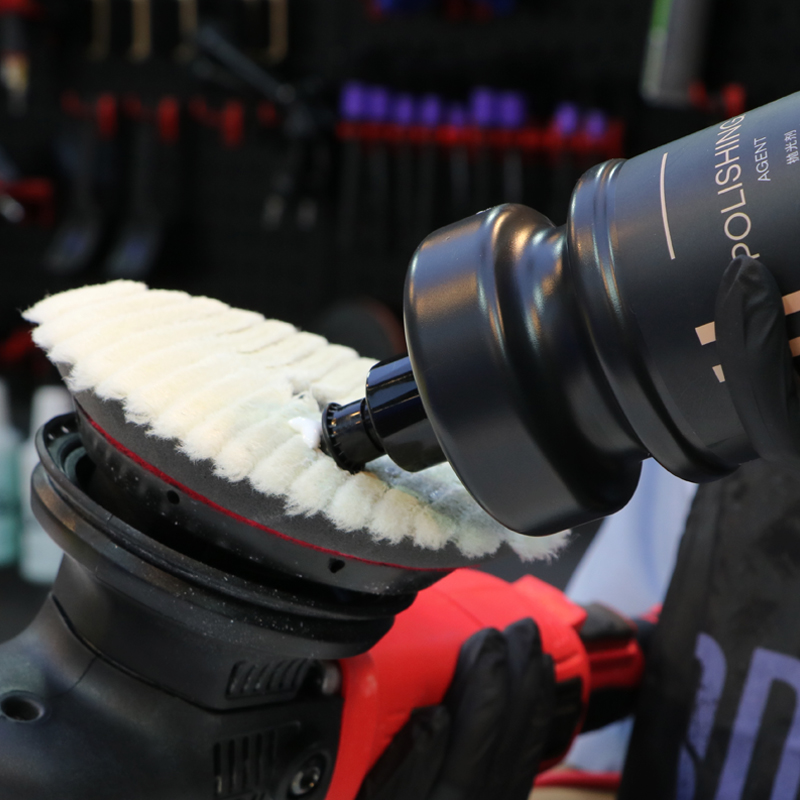
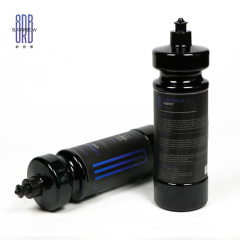
By hand, use a firm applicator pad and work a single section with even pressure. A car paint polish pass over a whole car by hand is slow work, so most shops keep it for spot repairs, door shuts, pillars and panels a machine cannot reach. The squeeze bottle's pointed nozzle lets you meter the product onto the pad a few drops at a time, which keeps each section under control.
Polish Sequence & Pairing
- Where it sits in the sequence — after the paint is washed, decontaminated and any heavier cutting is finished, and before the finish step. Nothing comes between the cut and the refine except a clean wipe.
- Pair it with mirror finish — the reducing agent in the same polish series is made to follow this cut. Run the two steps back to back and the panel comes up bright instead of merely clean.
- Why the middle cut is not the last word in gloss — it leaves a fine working haze and the occasional pad trail of its own. That is expected; the finish step is what removes it.
- Keep the pads apart — one pad for the cut, another for the finish. Reusing a single pad carries coarse residue into the refining step and puts marks back into paint you have just levelled.
- One cut, two job types — a wash-and-polish package can stop after the finish step and a wax, while a full correction job carries the same polishing compound for car scratches and light marring through to a panel wipe and a coating. The cut does not change; what goes on top does.
- Choosing protection afterwards — the car paint polish stage is where you decide what follows: a wax or sealant for a maintenance job, a coating where the customer has booked one.
Application Workflow
- Wash the panel and strip tar, iron and old wax so the pad works on clean clear coat, then dry it completely.
- Inspect under a swirl finder or a strong LED and confirm the damage sits in the middle cut range rather than being a scratch you can feel.
- Mask edges, body lines, badges and trim with tape; a pad that catches an edge can burn through in seconds.
- Prime the pad with a little compound and spread it at low speed before you build any pressure.
- Add the compound car polish in small dots across the pad rather than onto the panel; overloading slows the cut instead of speeding it up.
- Work one section at a time in overlapping passes, keeping the pad flat and the machine moving at an even pace.
- Keep the polish compound for car paint work wet. If it starts to dust or dry out, stop, wipe the section and begin a fresh one rather than working dried residue.
- Wipe the residue with a clean microfiber before it sets, inspect, and repeat the section only if the defect is still visible.
- Finish the panel with the mirror finish step, then protect the paint once the surface is clean and dry.
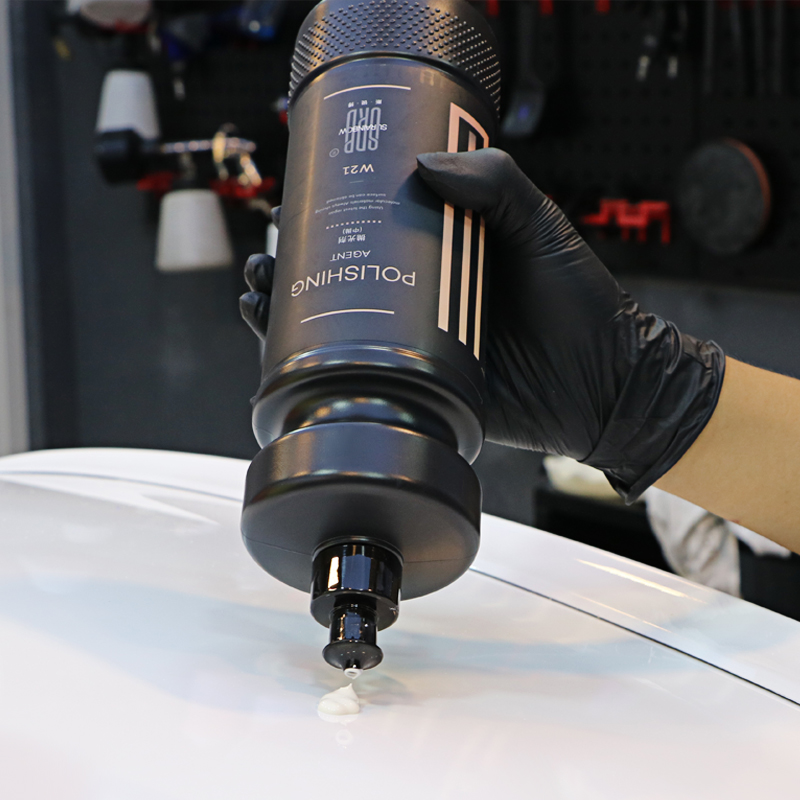
- This middle cut is supplied as a working-strength liquid abrasive. There is no water to add and no ratio to mix: this car paint polish is used exactly as it comes out of the 1 L bottle. If a process in your bay calls for a thinner consistency, confirm it with us first, because thinning changes how the abrasive behaves and the finish will no longer match the sample panel you approved. On the pad, prime the foam with a thin film, then start each working section with three or four pea-sized dots. Add the next dots in small amounts as the cut fades rather than loading the pad at the start; a primed, slightly wet pad cuts more evenly than a soaked one, and a small spot pad needs noticeably less than a full face pad. How far a bottle goes depends on pad size, machine, paint hardness, how much defect is being removed and how many passes a panel needs, so there is no single cars-per-bottle figure worth quoting. Measure the real dose on the sample panel you approved and scale that against your monthly volume when you size the order; that figure will serve your purchasing plan better than any estimate we could print in a table. More product does not buy more cut. Excess slings off the spinning pad, loads the foam and wastes volume you have already paid for, so keep the pad primed rather than soaked and wipe the residue while it is still soft. Left to set, the residue hardens into a film that takes longer to remove than the polishing did. On the bay, decanting a 1 L into smaller working bottles keeps the bulk stock clean and the dose under control. Label the working bottles, keep them capped and wipe the nozzle and threads after filling, because dried compound in the thread is what makes a cap seize and a bottle weep in storage. Between jobs, store the bottle sealed and upright, out of direct sun, with the cap and nozzle clean. Shelf life, storage conditions and the disposal of used compound and spent pads are set out on the safety data sheet for the batch, so ask for the current version when you place the order.
Specifications
| Product type | Middle cut car polishing compound |
| Model | W21 |
| Cut level | Moderate polishing / micro cut |
| Primary defects | Grinding swirl traces, 2000 grit sanding marks |
| Follow-on step | Mirror finish (reducing agent) |
| Application | Hand or machine polishing |
| Form | Liquid abrasive compound |
| Pack size | 1 L per bottle |
| Series | SURAINBOW polish series |
| Typical trade use | Detailing bays, body shops, vehicle reconditioning |
Sampling & Packaging Approval
- Start with the brief: the substrate, the defects you are chasing, the step you use today and the market the product will be sold in. Whether you are adding one correction step or building a full car care supplies range, each item is approved on its own.
- We confirm the sample scope and any applicable charges before dispatch, then send this car paint polishing compound for your team to run on a panel you already know.
- Test it against your current product on the same panel: cut speed, wipe-off, dusting, and the result after the finish step.
- Record the conditions and seal the approved panel as the reference that later bulk batches are compared against.
- Move to packaging: bottle, closure, label, carton and shipping marks, all checked against the container and closure you plan to use.
- Proof the artwork before printing — label copy, language, barcode and warning text. Changes after proofing are where most delays come from.
- Agree tolerances on fill, colour and seal, and write them into the order confirmation so bulk acceptance has a written reference.
Ordering, Delivery & After-Sales
Quotations are built per project rather than from a fixed list. The pack, the label, the quantity and the destination all move the price, so minimum order quantity and lead time are confirmed in the quotation rather than assumed from this product alone. SURAINBOW stock orders and OEM production are handled the same way: you send the brief, we confirm what is available and what has to be scheduled. Distributors comparing car cleaning products manufacturers usually want that in writing early, so pack, price, schedule and document set go into the same offer.
Stock moves quickly. In stock and fast shipping is our normal status on the SURAINBOW range, and mixed car care supplies orders can be consolidated into one shipment, so a cut, a finish step and a protection product do not arrive as three separate deliveries. Courier, LCL and full-container sea freight, air and rail DDP, and truck DDP are all available depending on destination and volume. Payment can be made by card, PayPal, Apple Pay, Google Pay or Afterpay/Clearpay where those methods apply; confirm the accepted method, currency and schedule with the order, and settle the balance before dispatch is confirmed.
For export, MSDS/SDS, CoA, GHS label information, commercial invoice, packing list and customs documents can be prepared, and the set your market actually requires is confirmed during quotation. Label copy can be reviewed against the destination market, though local regulatory approval and registration stay with the importer.
After delivery, report packaging damage, leakage or a shortage within 7 days of receipt, and any quality concern within 30 days. Include the order reference, batch number, affected quantity, photos or video, and a note of how the product was stored and used. Batch records and retained samples are kept so a batch can be traced back and compared with the approved reference; if you hold a sealed approval sample, send the same reference so the comparison starts from the same point.
Scale & Supply Capability
SURAINBOW is run by Guangzhou Liangdian Automotive Supplies Co., Ltd., a factory-trade operation set up in Guangzhou in 2010 and now 50 people strong. Sixteen years in car care have given us a one-stop supply position: our own SURAINBOW lines are held in stock for fast shipping, and an associate factory with modern production equipment and an established quality management system keeps replenishment moving. We take OEM and ODM work and our R&D team develops to your specification. Buyers in the Middle East, the United States, Southeast Asia, Europe, the UK, Russia, Africa and Australia already order from us.
FAQ
Can it take out deeper scratches, or do I need a heavier cut first?
A middle cut is the right level for sanding haze, machine trails and wash marring; it is not a repair for a scratch you can feel with a fingernail. If the panel carries coarser sanding tracers, heavy oxidation or one deep isolated scratch, take a heavier cutting compound over that area first and come back with this car paint polishing compound for the refinement pass. Judge each panel under a swirl finder before you decide.
Can I use it on a freshly repainted panel?
Only once the paint system is ready for polishing. A fresh refinish keeps curing for a period that depends on the paint brand, the booth and the conditions, so follow the paint maker's own guidance and check with whoever sprayed the panel before you take a car paint polish to it. On a new repair, start on an inconspicuous area and make sure the surface does not feel soft or drag under the pad.
How much compound should I put on the pad?
A few drops of this compound car polish on a primed pad is the normal starting point, adding small amounts as the cut fades. Consumption per car depends on pad size, machine, paint hardness and how much defect you are removing, so judge it on the sample panel you approve rather than working from a fixed figure. Keep the pad primed and the product spread before you apply pressure.
Is it suitable for gelcoat, marine or aircraft surfaces?
It is supplied as a car polishing compound for automotive paint systems, and that is the application we can speak to. Gelcoat, marine topcoats and aircraft finishes behave differently and may be softer or carry their own approved care routines, so confirm the substrate with us before use rather than assuming the cut will behave the same way. Tell us the finish you service and we will say whether this step is appropriate.
How is this different from your finish-step polish?
Cut level and defect target. This middle cut removes sanding marks and grinding swirls and leaves a fine working haze; the finish step is the finer polish compound for car paint refinement that takes out that haze and brings up the gloss. Most jobs run both, in that order. If you only stock one, match it to the damage you see most often, and if that is sanding haze, this is the one.
Will polish residue interfere with a wax or coating applied afterwards?
Residue left on the panel is the usual cause of poor bonding, so wipe the compound off while it is still soft, then give the panel a panel-wipe pass before any protection goes on. That single habit separates a coating that sits properly from one that fails at the edges. If your process is coating-critical, ask our team for the current technical and safety data sheet for the batch you receive, since it is the document your coating supplier will want to see. Shops that sell correction and coating as one package build this wipe into the job sheet along with the rest of their car care supplies, and it is the step that protects everything applied after it.