Product Overview
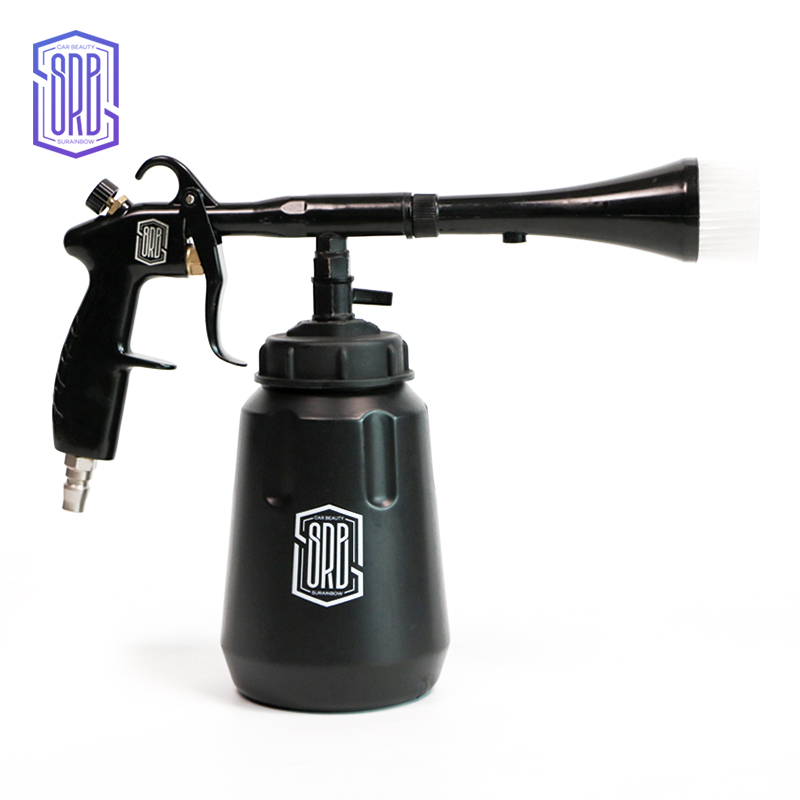
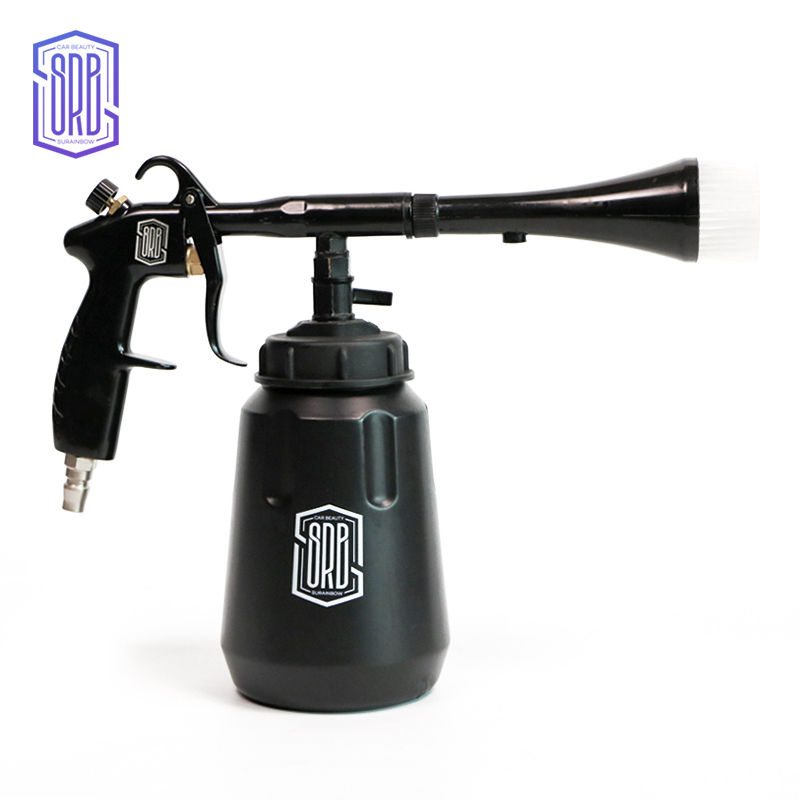
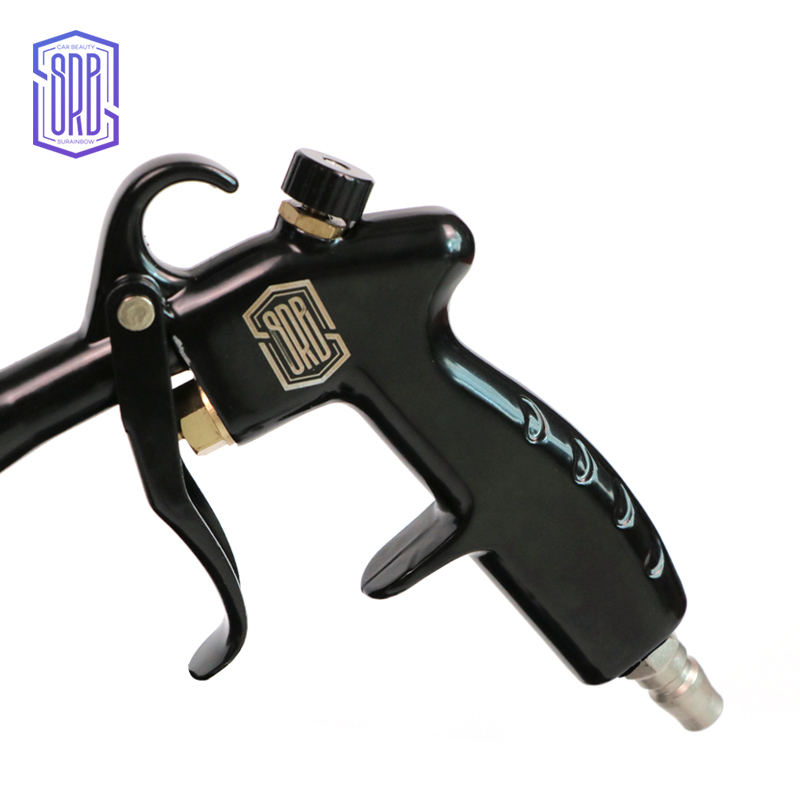
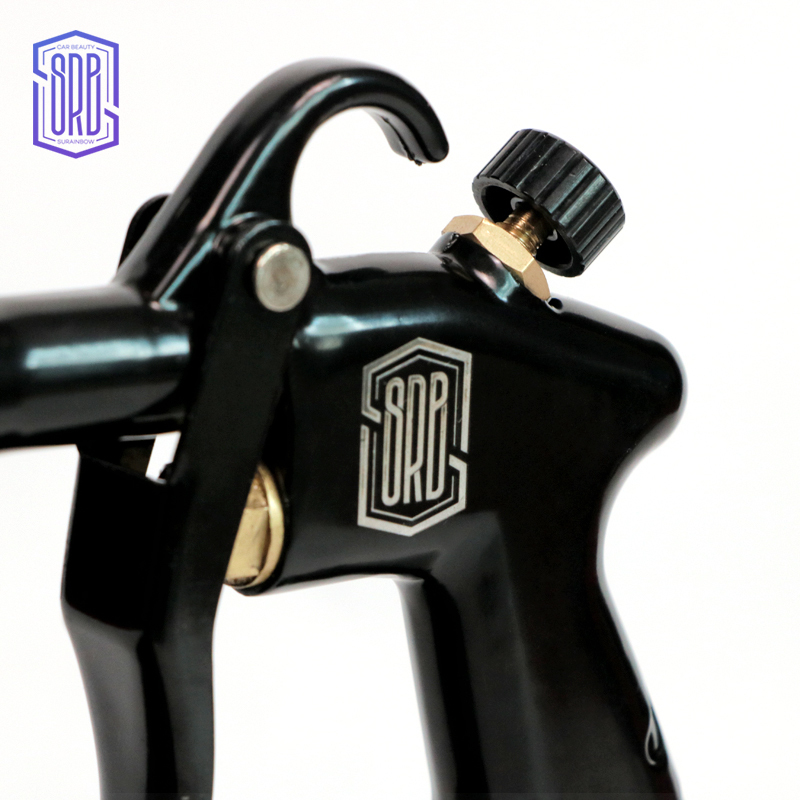
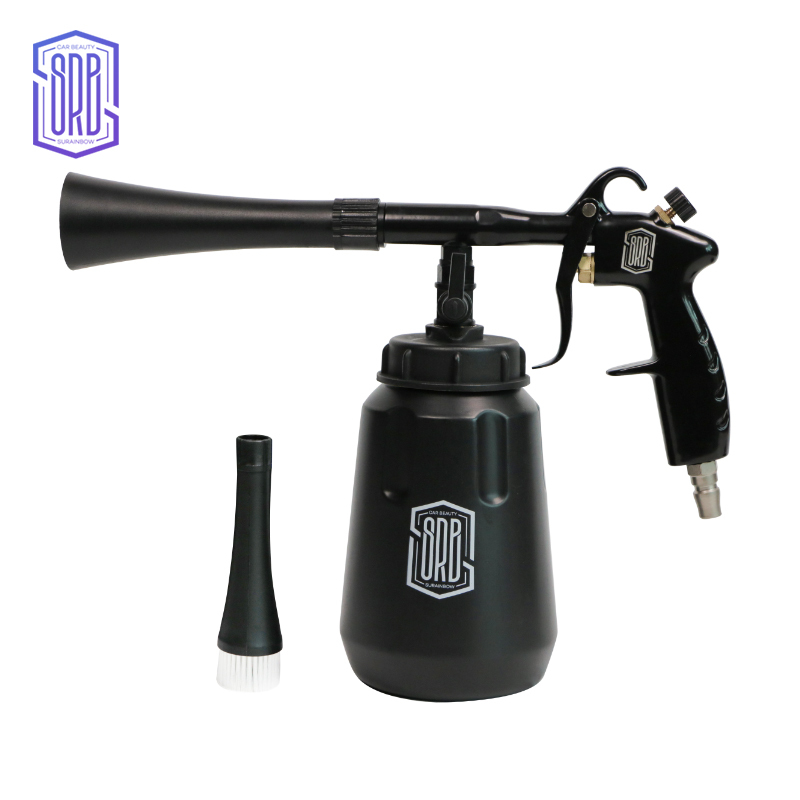
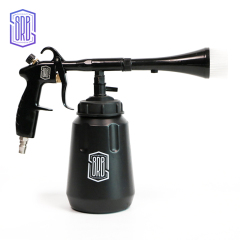
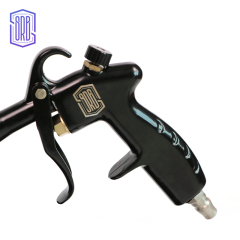
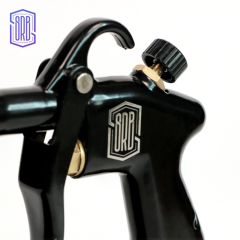
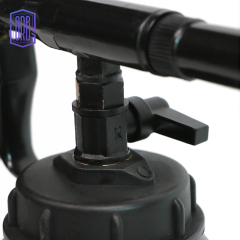
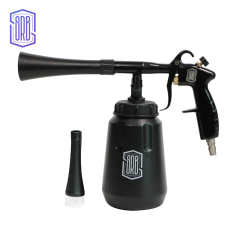
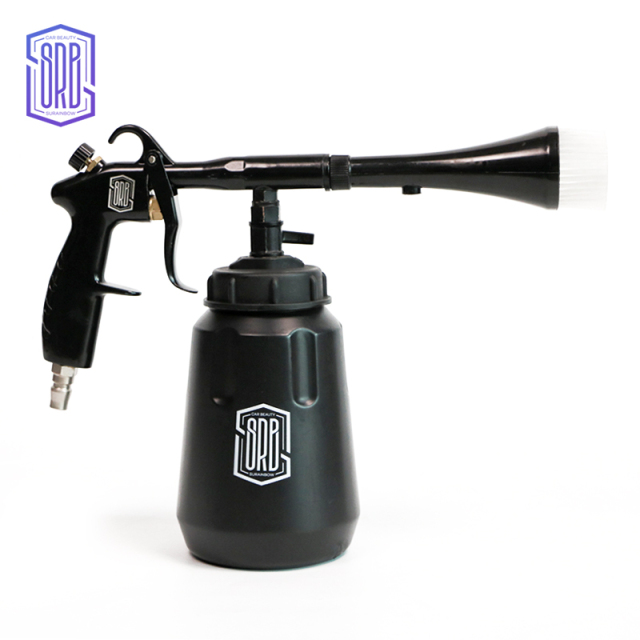
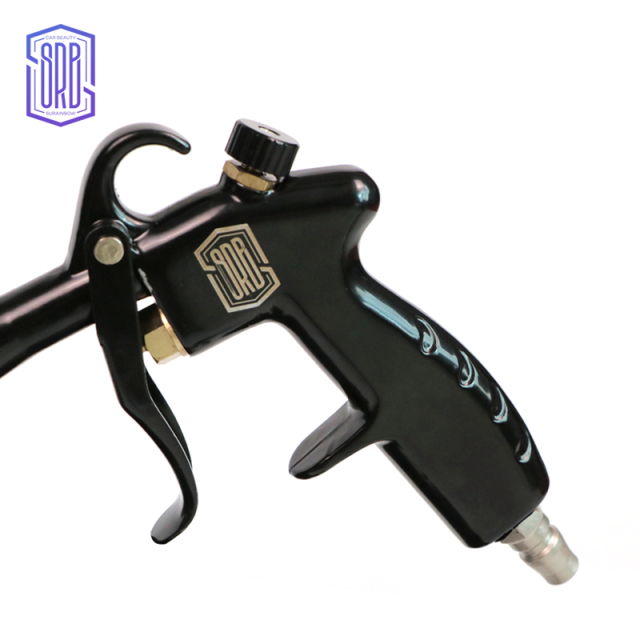
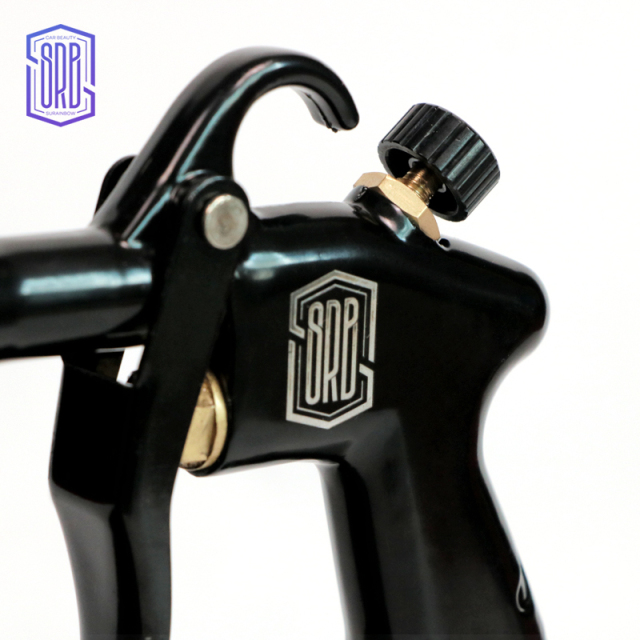
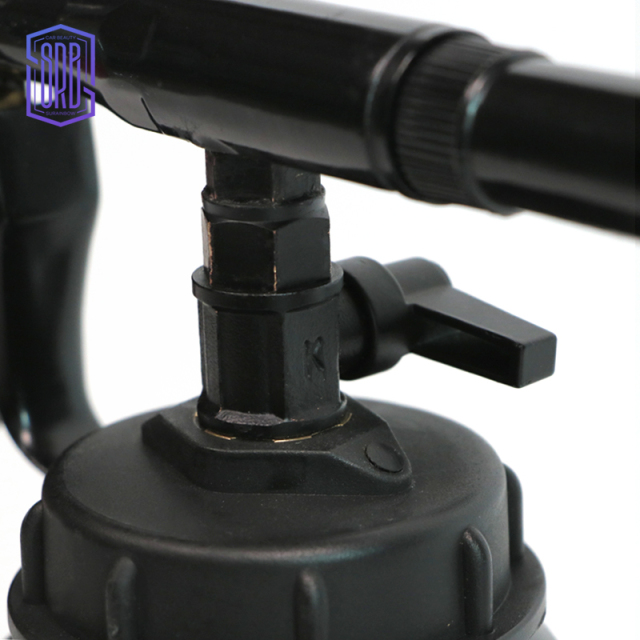
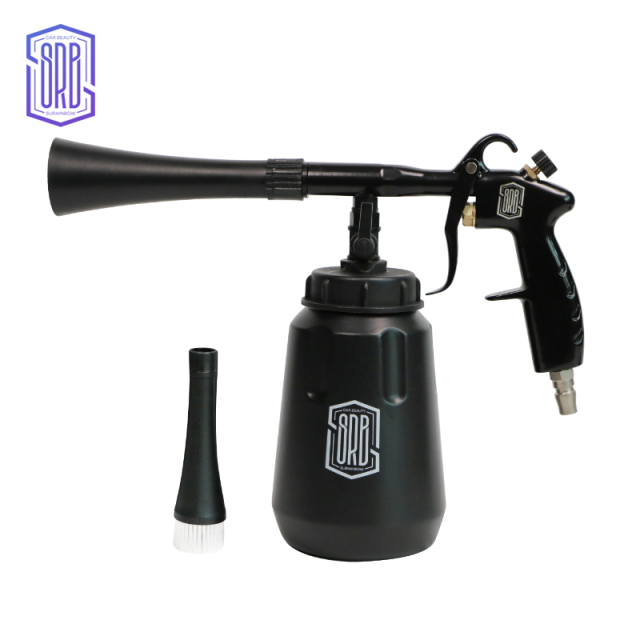
The Tornado Interior Cleaning Bearing Gun is an air-driven gun for the inside of a car. Compressed air enters through the fitting at the base of the grip, the trigger releases it, and the airflow pulls cleaner out of the bottle reservoir and drives it through the nozzle in a narrow, fast jet. Angled into a vent or run along a seat seam, that jet lifts dust out of the gap instead of wiping it across the surface. The gun ships with a plain nozzle and a brush nozzle, so one tool covers both the loosening and the washing away. The pistol grip, the metal trigger lever and the flow knob on top all fall within reach of the same hand, which leaves the other free for a cloth, a seat back or a door card. The difference shows in the order of the work. Instead of working a brush into every slat and following behind with a cloth, you clear the vent, the seam and the carpet edge in one movement and finish with a wipe. Detail studios, wash chains and mobile units keep the gun on the trolley rather than in the cupboard — it is one of the cleaning tools that turns up on almost every interior job. Distributors stock it for the same reason: it sits naturally beside the brushes, cloths and cleaners they already resell.
Key Features
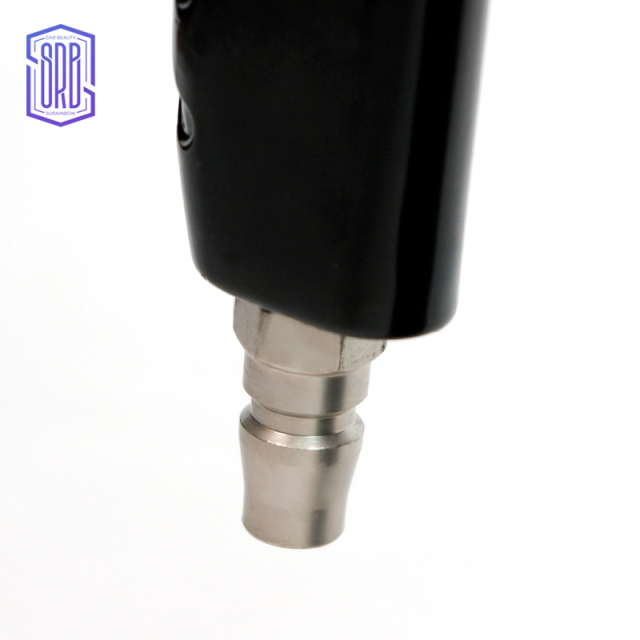
- Air does the reaching — the jet goes into vents, seams and channels where a finger and a cloth cannot follow, so dust is carried out rather than smeared over the surrounding trim. - Plain nozzle for the straight pass — a narrow jet for slats, rails and deep channels where direction and pressure matter more than spread. - Brush nozzle for the surface — bristles around the jet loosen dust from grained plastic and trim, and the same pass washes it away. - Trigger and flow knob together — the trigger gives instant on and off; the knob on top sets how much liquid and air reach the tip, from a wet flush down to a light mist. - One-handed pistol grip — a metal trigger lever under the index finger and a shaped grip keep the gun steady at shoulder height through a full interior. - Metal inlet and brass-toned connector — the air connection is metal where the wear happens, not a plastic thread that strips after a few hundred couplings. - Uses your existing cleaners — the reservoir takes the interior cleaners a shop already buys for its ceramic car care work, so the gun needs no dedicated chemical. - Built for the interior stage — one of the cleaning tools for car work that stays in the bay, because vents, seams and carpet edges come up on every job.
Air Supply & Setup
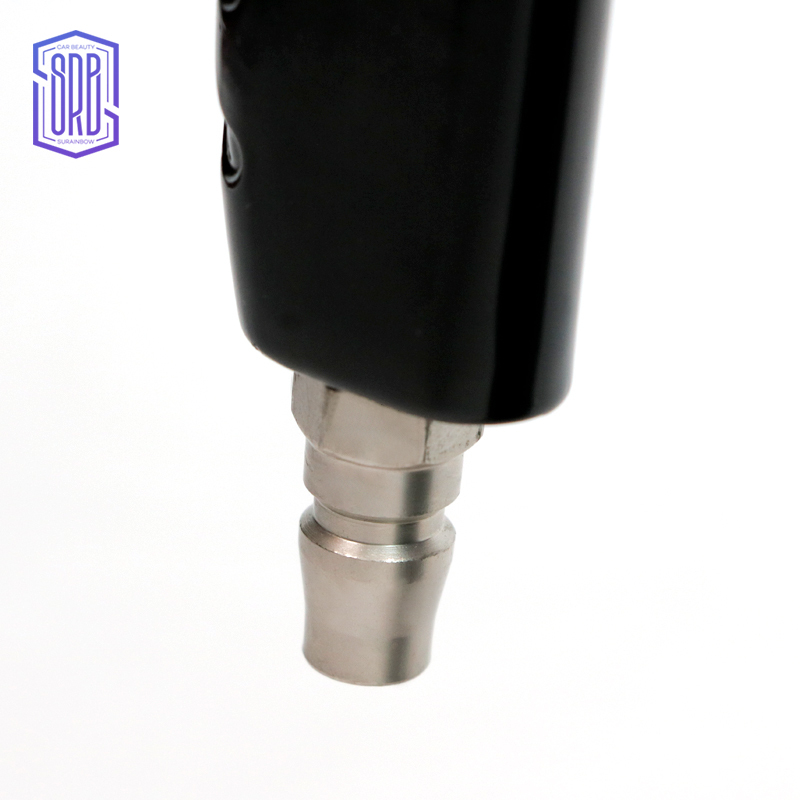
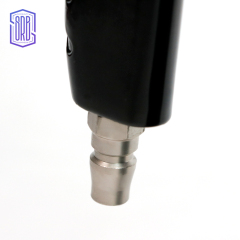
- Match the coupler before anything else. The inlet is a metal fitting at the base of the grip; check its thread against your hose coupler, and if you are unsure of the match, send a photo of the coupler and we will confirm it.
- Put a regulator and a moisture trap on the line. Dry air keeps water marks off trim and stops moisture from reaching the working parts of the gun.
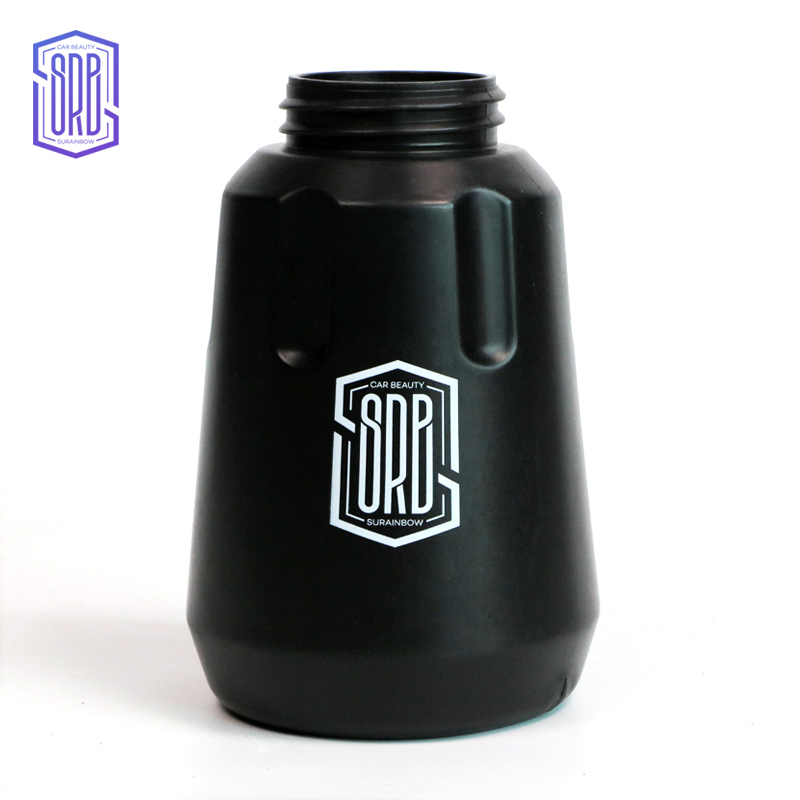
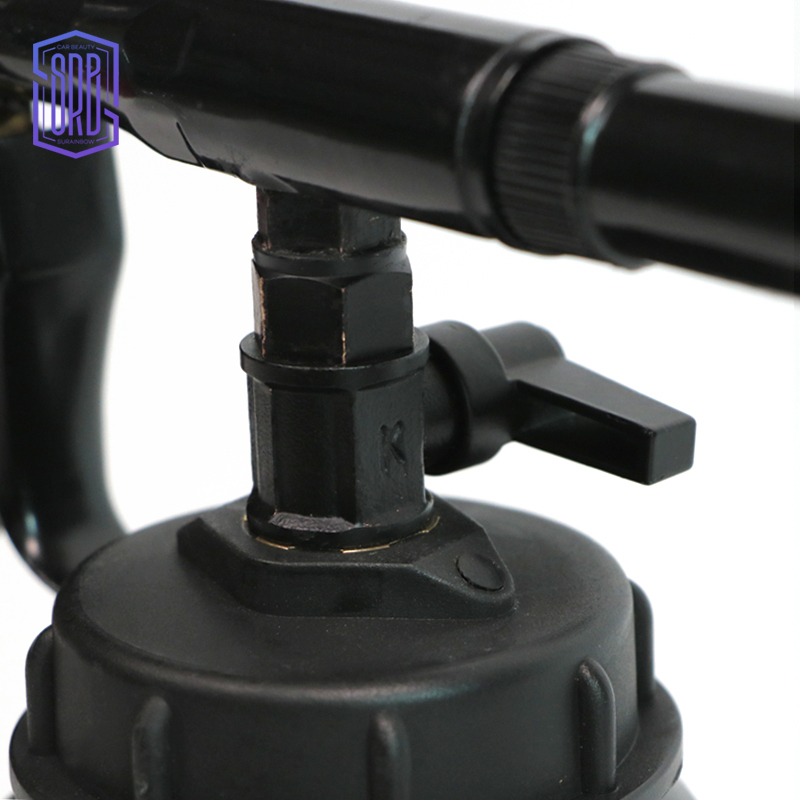
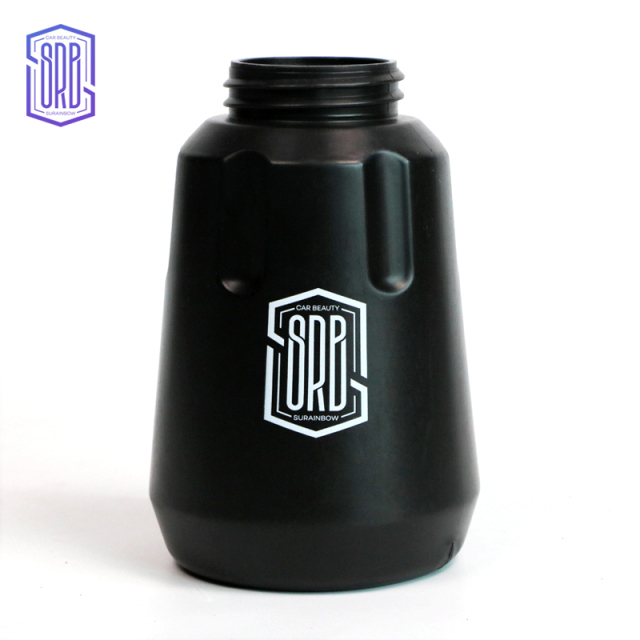
- Fill the reservoir with your interior cleaner — the water-based type most car cleaning products manufacturers supply — diluted to the ratio on its label, and screw the cap down until it seats.
- Open the air gradually — regulator first, then a quarter turn at a time on the flow knob.
- Test on a hidden area, under a seat or on the shut face of a door, to see how wet the surface becomes at that setting before you take it to a visible panel.
- Set the flow for the job in front of you: further open for a wet flush through a vent, closed down for stitching, fabric edges and switch surrounds.
- Check the inlet and the cap for leaks before you start on a customer's car, and again after the first ten minutes of use.
Interior Applications
An interior job usually starts at the vents, the fiddliest part of the cabin for any shop's cleaning tools, and that is where the gun earns its keep. Running the jet along each slat lifts dust out of the corners instead of pushing it further in, and the brush nozzle does the same on the surrounding dash panel, where dust has settled into the grain.
Work back from there. Seat rails and the channel under the seat collect grit that a vacuum cannot lift, and a short pass with the flow open flushes it into range. Along the stitching and piping of leather seats, turn the flow down and use the brush head in light passes so the stitch line comes clean without soaking. The same setting suits door pockets, grab handles and the gaps around window switches, while the console, button rows and handbrake surround — where dust turns into grey paste — come back with a controlled mist and a cloth.
Carpet is the other half of the job. The jet lifts flattened pile at the door sill and along the tunnel, where a brush on its own tends to polish the dirt rather than remove it, and one pass along the boot channel finishes the rear.
Coating work adds a step at the front of the job. Before an interior ceramic coating goes on, dust, talc and old dressing residue have to come out of the vents, seams and surrounds — that is the pass the gun is made for, and it leaves the surface clean and dry for the coating itself.
Specifications
| Product type | Pneumatic interior cleaning gun |
| Model | T-116 |
| Body material | ABS with aluminium alloy parts |
| Colour | Black |
| Weight | 0.96 kg |
| Size | 34 × 13.5 × 26 cm |
| Supplied with | Plain nozzle and brush nozzle |
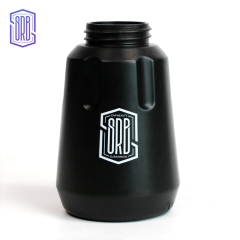
| Reservoir | Screw-on bottle |
| Air connection | Metal inlet fitting at the base of the grip |
| Flow control | Adjustable knob on top of the body |
| Brand | SURAINBOW |
| Origin | Guangdong, China |
Care & Maintenance
- Empty and rinse the bottle at the end of the day. Cleaner left standing in a reservoir is the usual reason a gun starts spitting.
- Flush clean water through the nozzle with the air on for a few seconds — especially after prep for an interior ceramic coating, when talc and dressing residue are thickest in the bottle — then leave the bottle and cap off to dry.
- Wipe the body with a damp cloth and never immerse it — the working parts are air-side, and water does not belong there.
- Work the brush bristles with your fingers or a comb to clear fibres, then stand the nozzle bristle-down to dry.
- Check the cap seal and the inlet fitting every few weeks; these two decide whether the gun still draws properly.
- Hang it on the hook beside your other cleaning tools between jobs, and drain the air line before connecting so any water in the line stays out of the gun.
Samples, Packing & Records
- Brief first — send the model, the quantity you have in mind and the destination market. - Test before you commit — a sample can be run on your own bench with your own cleaner; check the trigger, the jet and the brush head, and confirm sample and courier arrangements with your sales contact before dispatch. - Seal the approved reference — the sample you sign off is kept as the standard that bulk production is compared against. - Proof the packing in writing — label artwork, barcode data and carton marks are checked and approved before printing, so the carton that arrives is the one you signed off. - Batch records and retained samples — each run is recorded and a sample held, so a question months later can be answered against the actual batch. - Mixed loads — if the gun travels with liquids from car cleaning chemical manufacturers, say so at the brief stage so both are packed for the same shipment. - If something is wrong — report packing damage or a shortage within 7 days, and any quality concern within 30 days, quoting the order reference and batch number with photos.
Ordering & Delivery
| MOQ | 12 pcs |
| Packing | 12 pcs per box |
| Availability | In stock and fast shipping |
| Payment | Balance and payment schedule confirmed per order |
| Shipping method | Confirmed for your destination and order size |
| Export documents | Commercial invoice, packing list and customs documents |
| Lead time | Confirmed with your sales contact before the order is released |
| Supplier | SURAINBOW, car cleaning products manufacturers in Guangzhou |
| Also supplied | Cleaners, cloths and ceramic car care products from the same range |
Scale & Supply Capability
SURAINBOW is run by Guangzhou Liangdian Automotive Supplies Co., Ltd., a factory-trade operation set up in Guangzhou in 2010 and now 50 people strong. Sixteen years in car care have given us a one-stop supply position: our own SURAINBOW lines are held in stock for fast shipping, and an associate factory with modern production equipment and an established quality management system keeps replenishment moving. We take OEM and ODM work and our R&D team develops to your specification. Buyers in the Middle East, the United States, Southeast Asia, Europe, the UK, Russia, Africa and Australia already order from us.
FAQ
Which cleaners can go in the reservoir?
Water-based interior cleaners and diluted all-purpose cleaners are the normal choice — mix to the ratio printed on the label rather than stronger. Solvent-heavy products and neat concentrates are not recommended for a reservoir that is drawn through a nozzle. If you are unsure about a particular product, tell us its name and we will say whether it suits the gun.
Is it safe on leather, fabric and gloss trim?
With the flow turned down and the brush used lightly, yes. Keep the jet moving rather than holding it in one spot, test on a hidden section first, and on perforated leather work with low flow and blot afterwards instead of soaking the holes.
Can it be used before an interior ceramic coating?
That is one of its primary functions. Dust, talc and old dressing come out of vents, seams and switch surrounds so the coating goes onto a clean surface; give the panels time to dry before the coating is applied.
Can I use it on wheels, engine bays or exterior panels?
It is set up for interior work — vents, seams, carpet and trim. Wheels and engine bays need more liquid and a different nozzle, and the fine jet is not the right tool for a wheel arch. Keep this one for the cabin.
Can the flow be turned down for headliners and pillars?
Yes. Close the knob on top to a light mist, keep the gun moving and work in short sections; on a headliner, mist the brush and work through it rather than spraying the fabric directly.